



AI Search Visibility Starts at the Frontline: Why Your People Now Drive Marketing Results

The internet just changed jobs on you. For two decades, marketing teams ran the show. They built the website, ran the ads, wrote the content, and pushed the brand into search results. The frontline served customers. Marketing earned attention. Those lanes are gone.
AI search visibility — the ability to be cited and recommended by ChatGPT, Google AI Overviews, Perplexity, and Gemini — is now governed by signals your marketing department cannot generate alone. Authority. Experience. Trust. Expertise. The four pillars Google formalized as E-E-A-T have become the filter that decides whether your business gets named when a buyer asks an AI to recommend a dealer, a shop, or a service. According to Wellows’ 2026 ranking-factors analysis, roughly 96% of AI Overview content comes from sources with verified E-E-A-T signals.
Those signals come from your customers. They come from reviews that name a specific employee and a specific outcome. They come from how a customer felt walking out of your store. The marketing team can’t create that experience. Your frontline can — or can’t. And the AI is reading the result.
The Authority Shift Behind AI Search Visibility
AI search engines don’t crawl your homepage looking for marketing copy. They look for verifiable, third-party evidence that you actually do what you claim. That evidence shows up as reviews on Google, DealerRater, Yelp, and Carfax. It shows up in Reddit threads where customers swap recommendations. It shows up in industry directories and “best of” lists. Those mentions are weighted by AI systems based on how recent, how specific, and how trusted they are.

Two stats reframe the priority list. According to SOCi’s 2026 Local Visibility Index, ChatGPT currently recommends just 1.2% of all local businesses, and only about 45% of businesses that rank well in traditional Google local search also appear in AI recommendations. Google ranking and AI visibility are now two different scoreboards.
Even more telling, BrightLocal’s 2026 Local Consumer Review Survey found that 45% of consumers now use AI tools to find local business recommendations, up from 6% the year before — a more than seven-fold jump in twelve months. That growth is not a forecast. That is the floor.
Reviews and customer-generated trust signals sit at the center of both scoreboards. Reviews are not a marketing nice-to-have anymore. They are the input variable AI uses to decide whether you exist in the answer.
What the Data Shows About Reviews, Trust, and Frontline Performance
Widewail’s 2025 Voice of the Customer report revealed exactly where the dealership bottleneck is forming. U.S. franchise dealers generated 5.5 million Google reviews in 2025, a 25% jump year-over-year. But the analysis showed communication failures and honesty concerns hitting sales departments as hard as service. Communication issues were named in 48.4% of sales reviews and 48.7% of service reviews in Q4 2025.
The cause Widewail identified is staff turnover. Sales staff cycle out every six to nine months in many stores. New hires don’t have product knowledge. They give inconsistent answers. Customers interpret inconsistency as deception, even when it’s just inexperience. The review feedback then enters the same data layer AI engines pull from when deciding which dealership to recommend.
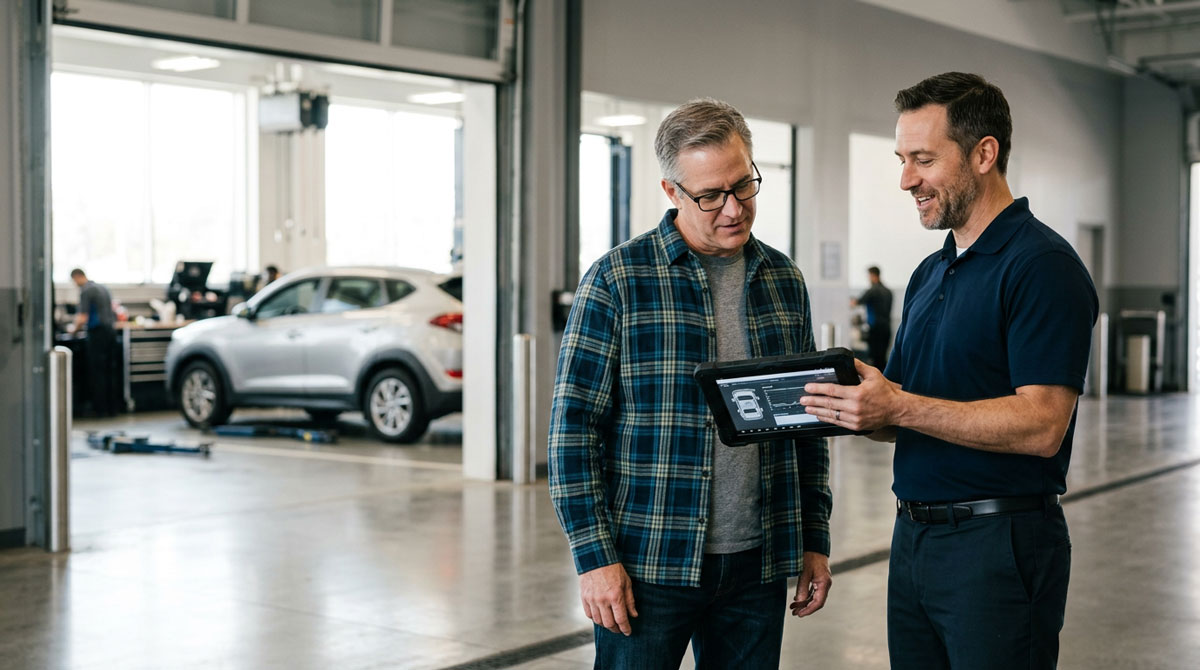
CDK Global’s 2025 Ease of Purchase data backs this up. Their score fell from 88% in 2024 to 84% in 2025, with roughly 10% to 16% of salespeople dropping the ball on the metrics CDK tracks across product expertise, professionalism, and trust. With over a million new car sales each month, that translates into hundreds of thousands of customer experiences hitting reviews, social, and AI training data each year as negative signals.
Compare that to what good frontline service produces. According to CDK Global research, around 90% of Gen Z customers return to the dealership where they bought their vehicle for service, and customers happy with service are over 80% likely to buy their next vehicle from the same dealer. The frontline isn’t just affecting reviews. It’s compounding into lifetime value, repeat purchases, and the brand mentions AI engines learn from over time.
The signal AI engines actually weight
| Signal Type | Where It Comes From | AI Visibility Impact |
|---|---|---|
| Specific, named-employee reviews | Frontline service experience | Critical |
| Third-party industry mentions | Reddit, DealerRater, Carfax, Yelp | Critical |
| Verified author bylines | Real subject-matter experts on staff | High |
| Original first-hand content | Marketing + frontline collaboration | High |
| Schema markup & technical SEO | Marketing / web team | Medium |
| Generic ad copy and homepage messaging | Marketing department alone | Low |
The New Role of Marketing: Doorway Expert, Not Position Mover
The role of the marketing professional has not disappeared. It has shifted. The job is no longer to push your dealership up the rankings through volume of content and keyword optimization. AI engines have effectively neutered that playbook for local. According to research from BrandCatalyst360, roughly 80% of URLs ChatGPT cites do not rank in Google’s top 100. Traditional ranking signals predict almost nothing about AI visibility.
The new marketing job is to position the dealership as the industry expert at the doorway of the internet — answering the questions buyers and shoppers are typing into AI engines before they ever reach your website. That means publishing original content that demonstrates first-hand experience: real model breakdowns, real comparisons, real “I tested this and here’s what happened” content. Demonstrable experience is now an algorithmic filter, not a quality guideline.
The marketing professional’s second job is to amplify the frontline. The salesperson with 30 great reviews tied to specific products and outcomes is the most valuable asset the marketing team has. A bio page, a video, a quote pulled into a blog post, a name attached to a social campaign — these are the moves that build E-E-A-T signals AI can verify. Marketing puts the frontline on stage. The frontline supplies the substance.
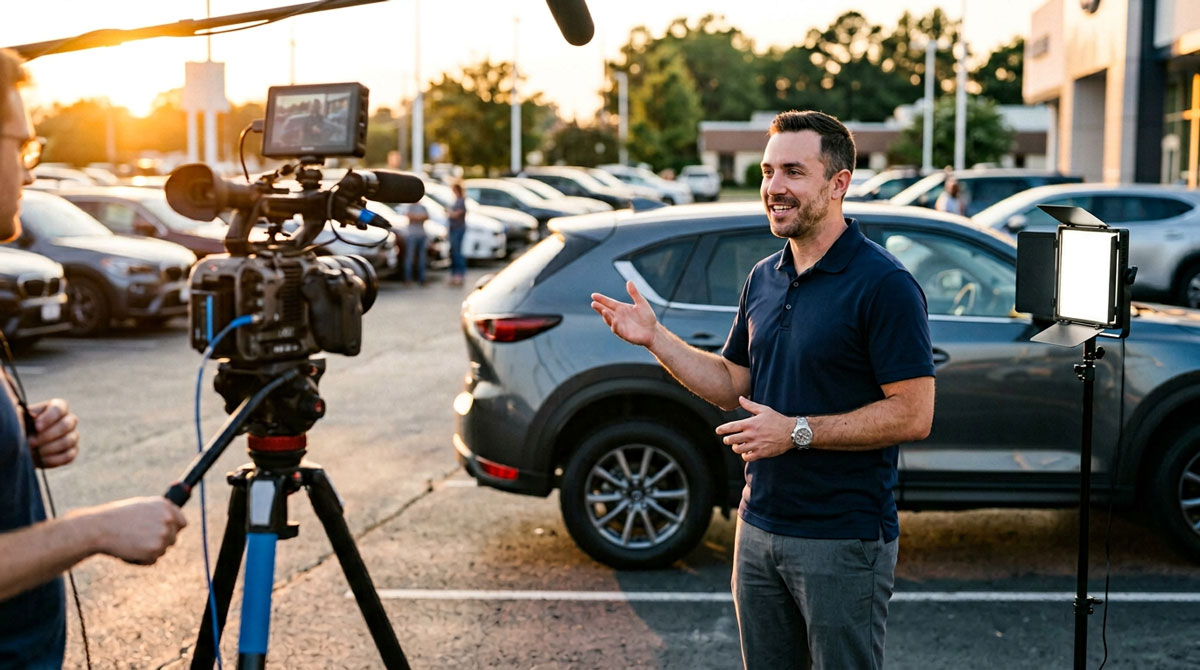
This is the inversion of the old model. Marketing used to lead. The frontline used to support. In an AI-cited search environment, the frontline leads with experience, authority, and customer-validated trust. Marketing supports by packaging those signals so AI engines can find, parse, and cite them.

Six Questions Every Dealership Leader Should Be Asking
These are the strategic questions worth bringing to your next leadership meeting. Each one comes with the action it implies.
Are our customer reviews actually about the experience our team delivered, or just about the transaction?
Audit your last 100 Google reviews. Count how many name a specific employee, describe a specific moment of help, or reference a specific product feature. If the majority are short, generic, transactional reviews like “good service, easy process,” your team isn’t building the kind of experience that earns specific praise.
Action: Train your frontline to ask for reviews that describe the help, not the outcome. Specific praise is what AI engines parse and cite.
Do our frontline employees have the product knowledge to answer the questions buyers research before they walk in?
Pull the top 20 questions buyers are asking AI engines about your top three vehicles. Test each of your salespeople on those questions. Anyone who can’t answer them confidently is not just losing in-person deals. They are generating the inconsistent, low-knowledge interactions that produce negative review language.
Action: Build a weekly product training cadence tied to the actual queries shoppers are typing into AI tools.
How is staff turnover affecting our review consistency and our brand’s online voice?
Map your average tenure by department. If your average salesperson tenure is under 12 months, your store is publishing inconsistent customer experiences into the public internet faster than you can clean them up. Compensation, training, and onboarding are not HR issues. They are SEO and AI visibility issues now.
Action: Treat retention as a marketing performance metric. Tenured employees produce more specific, brand-positive reviews.
Are we appearing across the third-party sites AI tools actually pull from?
ChatGPT, Perplexity, and Google AI Overviews pull from a wider mix of sources than most dealers realize: Reddit, DealerRater, Carfax, Yelp, niche industry directories, “best of” lists, and regional news. Run the prompt “best [your brand] dealer in [your region]” through ChatGPT, Perplexity, and Google AI Overviews. Note every source cited in the response. That is your real visibility footprint.
Action: Build presence and reviews on every platform AI is actually reading from, not just Google.
Are we training our marketing team to work as amplifiers for our subject matter experts?
Pick three frontline employees with strong product knowledge and good customer relationships. Give them author bylines on your website. Have them on camera for short product walkarounds. Quote them in blog content. Build their LinkedIn presence. AI engines reward content tied to verifiable, real human experts. Anonymous, dealer-published content is downgraded.
Action: Reorganize the content team around frontline expertise instead of generic blog topics.
Are our managers being held accountable for review-generating customer experiences, not just unit volume?
Volume targets without experience targets create the exact behavior that produces transactional, generic reviews. Specific praise per month, mentions of specific employees by name, and net-positive review velocity are the metrics that translate into AI visibility. Revenue follows reputation in an AI-cited search environment.
Action: Add a review-quality KPI to every sales and service manager’s compensation structure. Pay for reputation, not just transactions.
5 Frequently Asked Questions About AI Search Visibility
Why does my frontline team affect AI search visibility?
AI engines like ChatGPT, Google AI Overviews, and Perplexity decide which businesses to recommend based on third-party trust signals, primarily customer reviews, mentions on review sites, and content that demonstrates real-world experience. Those signals are generated by what your frontline team does in person and how customers describe it afterward. Marketing copy on your own website carries less weight than verified, customer-generated content.
How do customer reviews influence whether AI tools recommend my dealership?
Reviews provide the specific, verifiable evidence AI engines use to confirm what your business actually does well. ChatGPT and similar tools weight reviews from third-party sites like DealerRater, Carfax, Yelp, and Google. Specific reviews that name employees, describe interactions, and mention products are more useful to AI than generic five-star ratings. Volume and recency both matter, but specificity is the new differentiator.
What is E-E-A-T and why does it matter for AI citations?
E-E-A-T stands for Experience, Expertise, Authoritativeness, and Trustworthiness, which is Google’s framework for evaluating content quality. In 2026, E-E-A-T has become an active filter for AI-generated answers. Approximately 96 percent of AI Overview content comes from sources with verified E-E-A-T signals. Trust is the most weighted of the four. Without verified third-party trust signals, your content is unlikely to be cited.
Can marketing alone improve AI search visibility?
No. Marketing can publish content, build schema, and improve site structure, but those signals only get you considered. The trust signals that move you from considered to cited come from outside your website, from reviews, third-party mentions, and customer interactions across the internet. Marketing without strong frontline performance hits a ceiling.
What should dealerships train frontline employees on to improve online visibility?
Train on three things: product knowledge depth, consistent communication scripts that align across the team, and how to ask for reviews that describe the experience rather than just the outcome. Reviews that mention specific products, specific employees, and specific moments are the highest-value content for AI citation. Training the frontline is now the most direct lever for improving AI search visibility.
Point of View: Marketing Doesn’t Lead Anymore. The Frontline Does.
For the last twenty years, the smartest move a dealer could make was hiring the right marketing person. Build the website, run the ads, get on page one. The marketing team owned the visibility lever. That model is broken.
What separates the dealers who win in AI-cited search from the ones who disappear is no longer the cleverness of their content strategy. It is the consistency of their customer experience and the specificity of the reviews that experience produces. The marketing team can package, amplify, and structure those signals, but it cannot create them. Only your people can.
The dealers I see getting this right are reorganizing around the customer-facing employee. They are training salespeople like product experts. They are giving service advisors author bios. They are turning their best technicians into video stars. They are paying managers for review quality, not just unit volume. Those dealers are starting to show up in AI answers, while their better-funded competitors with prettier websites stay invisible.
If your frontline doesn’t have the trust of your customer, no amount of marketing spend will move your position. AI engines are now reading what your customers actually say, not what your marketing team wishes they would say. The fix is not a bigger ad budget. The fix is taking a hard look at who is talking to your customer and asking whether that person is the kind of expert AI would want to cite.
The doorway is the new frontline. Your marketing team’s job is to open it. Your frontline’s job is to make the customer want to walk through it again, and to write about it in a way the next AI engine can find. That is the new marketing model. Most dealers haven’t caught up yet. The ones who do first will own AI search in their market for the next ten years.
About the Author
Branden Bodendorfer is the Director of Marketing for Wheelers Family Auto Group , a six-rooftop Chevrolet and GMC dealer group in Central Wisconsin. With 20+ years of business and marketing experience, he has been recognized with SBA Entrepreneur of the Year nominations and Small Business of the Year awards, and has been featured on ABC World News, the NBC Today Show, ESPN, CNN, and Disney platforms.
In addition to his automotive marketing work, Branden is the creator of the Key2Success Planner — a digital planning and productivity system used by professionals in 52 countries — and operates a business coaching practice focused on leadership, systems, and scalable growth.
His automotive content, including the Destination EV YouTube channel covering GMC Hummer EV and Sierra EV, has built a substantial following among consumers and industry professionals.
Branden brings a practitioner’s perspective to automotive marketing: everything he writes about, he is actively running for real dealerships in competitive markets. His work sits at the intersection of data-driven strategy, digital retail best practices, and the on-the-ground realities of regional dealer groups.
brandenbodendorfer.com | Wheelers Family Auto Group | Key2Success Planner
Sources & References:
BrightLocal Local Consumer Review Survey, March 2026 | Widewail Voice of the Customer / Car Dealership Guy, January 2026 | Wellows, Google AI Overviews Ranking Factors, February 2026 | CDK Global, Car Salespeople Step Up in Q1 2026 | CDK Global / Car Dealership Guy, Future of Service, December 2025 | SOCi Local Visibility Index via Marketing Code, 2026 | BrandCatalyst360, ChatGPT Ranking Research, 2026 | BrightLocal LCRS 2026 Full Report