
Magazines cover a wide array subjects, including but not limited to fashion, lifestyle, health, politics, business, Entertainment, sports, science,



Magazines cover a wide array subjects, including but not limited to fashion, lifestyle, health, politics, business, Entertainment, sports, science,
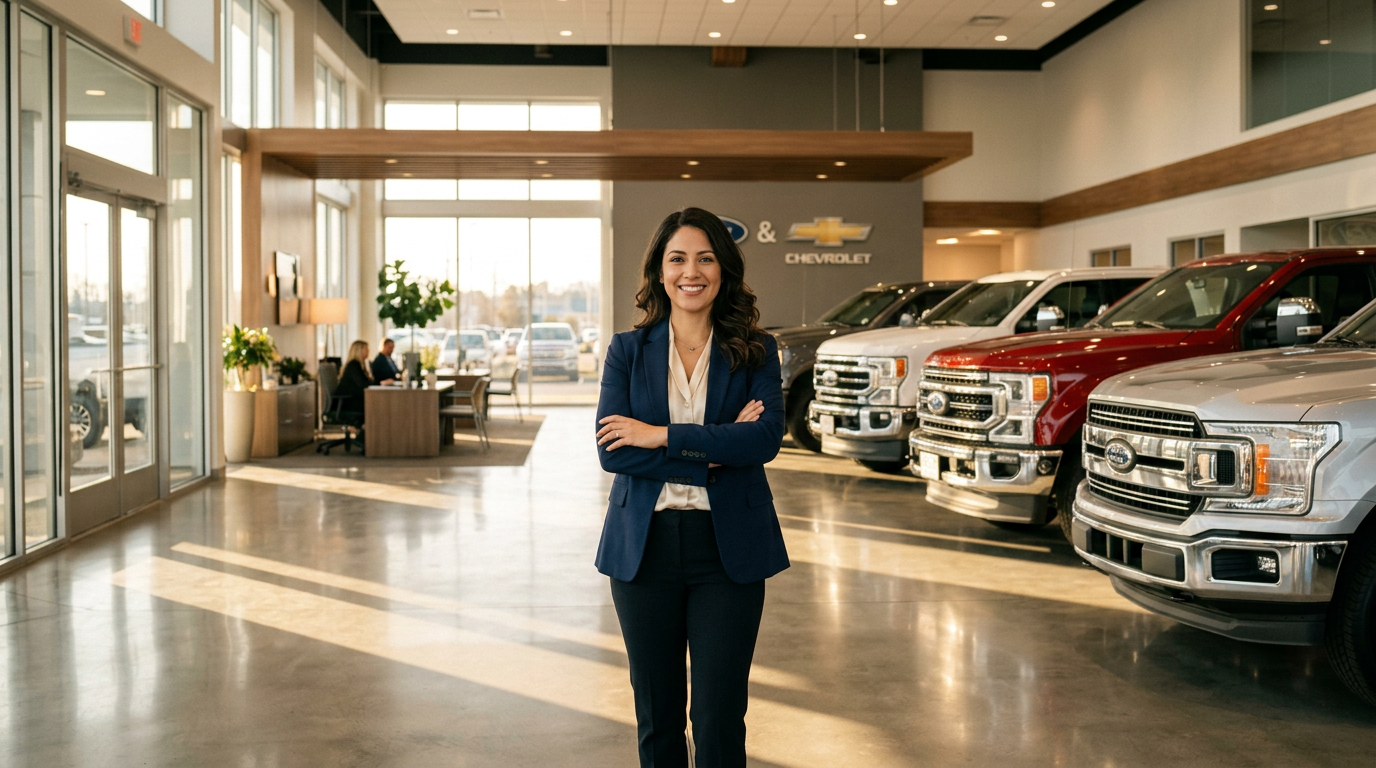
By Lexy Tabbert | Marketing Director, Beadle Auto Group | March 2026
The best digital marketers in the automotive industry aren’t studying other automotive marketers.
They’re studying Airbnb. They’re watching what Booking.com does with user-generated reviews. They’re paying attention to how a boutique hotel in Scottsdale builds a following on TikTok that makes strangers feel like they already belong there before they ever check in.
And then they’re asking: why aren’t we doing this?
I’ve been the sole marketing director for a multi-rooftop, multi-OEM rural dealership group for years. No agency. No assistants. No vendor holding my hand. What I’ve learned — especially in the last six months — is that the most valuable marketing education I’ve gotten hasn’t come from an automotive conference or an OEM playbook. It’s come from watching industries that figured out the human side of buying long before we did.
This article is for the dealer marketers who are willing to look outside the bubble. Because what’s happening in digital right now is going to reward the ones who do — and quietly bury the ones who don’t.
Here’s something the travel industry understood before we did: people don’t buy the best option on paper. They buy the option that feels right.
Travel sites like TripAdvisor, Airbnb, and Booking.com built their entire model on this truth. They don’t lead with specs. They lead with firsthand experience. Real photos from real guests. Written reviews that say “the sheets smelled like lavender and the host left us a handwritten note.” That’s not a feature list — that’s an emotional signal that says you will be taken care of here.
This is the EEAT principle — Experience, Expertise, Authoritativeness, Trustworthiness — applied to content in a way that actually changes behavior. Google built their entire quality rater framework around it because real human experience outperforms polished copy every time.
Now think about your dealership’s website. Your VDPs. Your blog posts. Your social media. Ask yourself honestly: does any of it feel like a real person wrote it? Does it feel like someone who has actually sold a truck in January to a farmer who drove two hours in a blizzard to get there? Or does it read like a template?
The travel industry figured out that the most powerful thing you can publish is a genuine first-person perspective. Not what looks best on paper — what actually happened, what you actually recommend, what you personally believe.
We keep looking for influencers outside our dealerships when the most credible voice in the room is already standing on the lot.
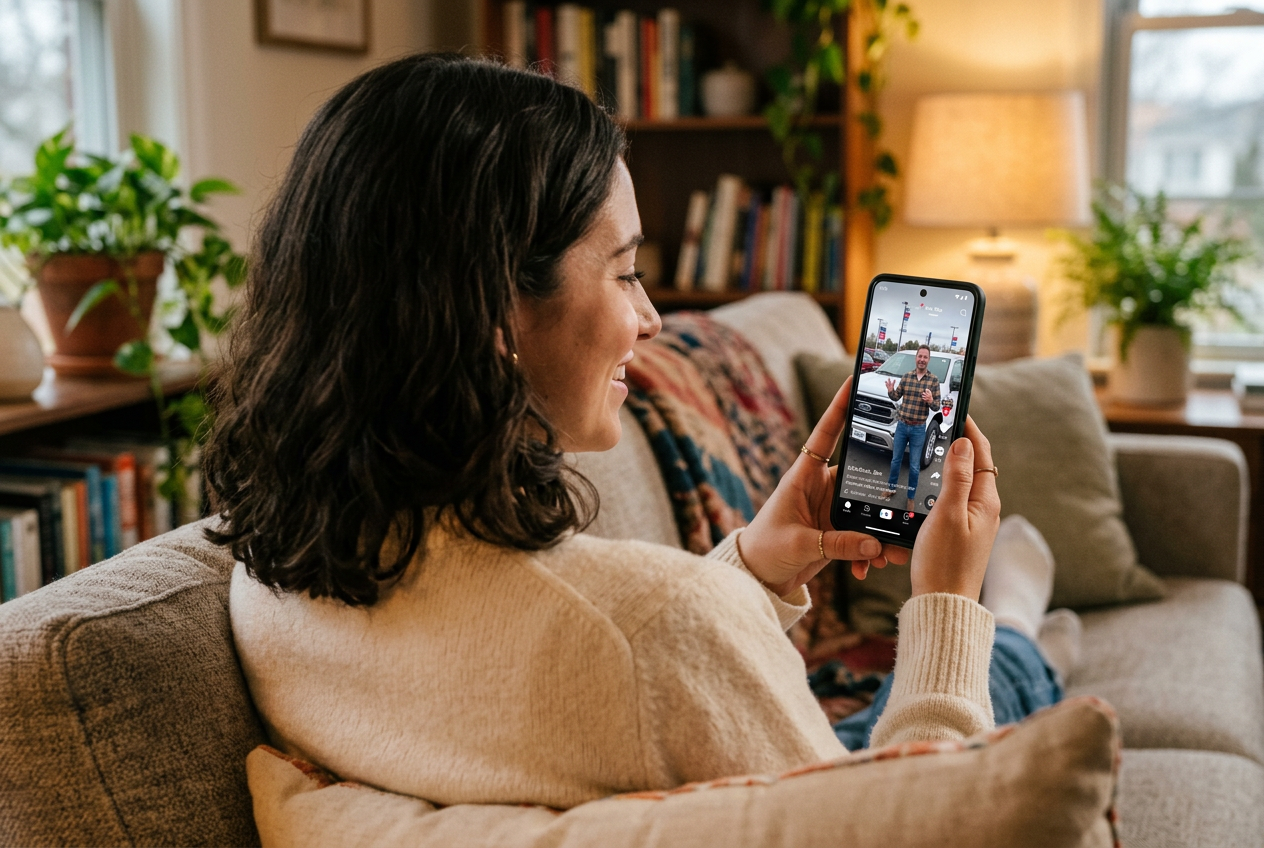
I’ll be honest with you: this one is harder to execute than it sounds.
I know the value of consistent video content. I know it intellectually and I feel it personally — because I follow people online who I have never met, and I genuinely feel like they are my friends. I know what their kitchen looks like. I know what their dog’s name is. I know which product they tried and hated and which one changed their life. And because of that familiarity, if they opened a business in my town tomorrow, I would walk in without hesitation. The barrier would already be gone.
That is exactly the barrier the automotive industry needs to break.
Car buyers are nervous. Not about the vehicle — about us. The fear of being taken advantage of, of being pressured, of not knowing enough to protect themselves — it’s real and it’s persistent. No Google Ad fixes that. No perfectly optimized headline fixes that. But a consistent video presence, where buyers get to know the real people behind the dealership before they ever step through the door? That chips away at it every single week.
The travel industry has mastered this. Watch how boutique hotels and independent travel influencers build audiences. They’re not running specs. They’re showing you the view from the balcony at 7am. They’re introducing you to the front desk manager by name. They’re making you feel like a regular before you’ve ever visited.
Dealerships that figure out how to do this — consistently, authentically, without it feeling like a commercial — will own a competitive advantage that cannot be bought with a bigger ad budget.
Audience trust isn’t available for purchase. It’s earned, slowly, one video at a time.
The challenge is real: it takes coworker buy-in, it takes time, and it takes the willingness to show up on camera even when it’s uncomfortable. But the dealerships that solve this problem first will have built something their competitors can’t replicate, because audience trust isn’t available for purchase. It’s earned, slowly, one video at a time.
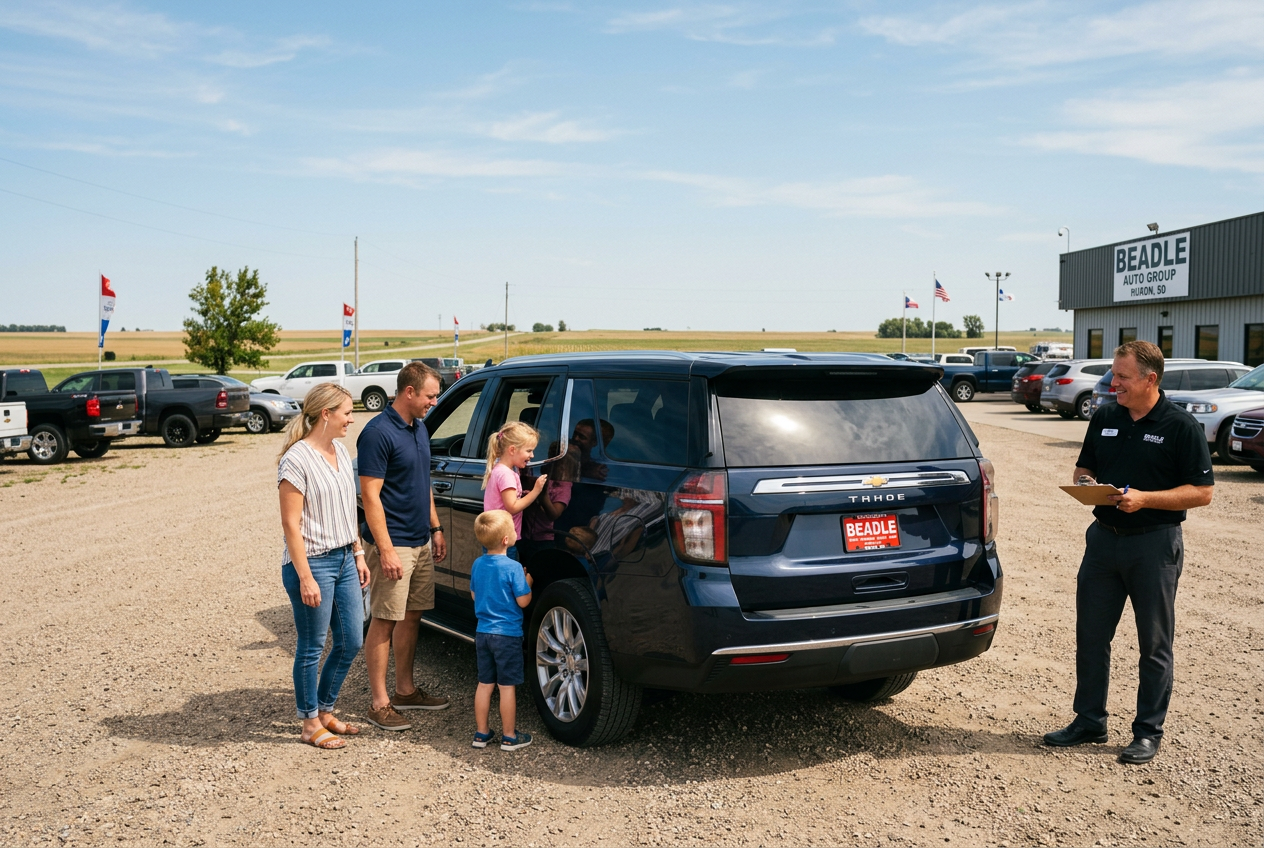
This is the part most people in automotive aren’t saying out loud yet. I’ll say it.
The traditional dealership vendor stack — one agency for paid search, one for social, one for SEO, one for inventory merchandising, one for reputation management — was built for a world where specialized knowledge was siloed and expensive to access. That world is changing faster than most dealers realize.
AI tools are collapsing the knowledge gap. Tasks that required a specialist six months ago can now be done by one entrepreneurial-minded person with the right tools, the right curiosity, and the willingness to learn. The ROI math on the traditional vendor model is getting harder to justify every quarter.
I run marketing for multiple rooftops across several OEM brands with no agency and no assistants. Vendors in automotive charge by the rooftop, not by the result. For a rural dealer group with our footprint, that math has never made sense — and the OEM-approved vendor basket, while convenient, offers the exact same options to every one of your competitors. You’re not buying an edge. You’re buying conformity.
You’re not buying an edge. You’re buying conformity.
What I’ve learned to do instead is look outside automotive entirely. When I find a tool or platform that wasn’t built for car dealers — that was built for content marketers, or e-commerce operators, or digital agencies — and I figure out how to apply it to my specific situation, the results are often dramatically better than their automotive-specific equivalent. And the cost difference is significant.
If you found yourself reading this article, you’re probably an entrepreneurial soul who is actively trying to find the cutting edge in today’s market — and that already puts you ahead of most. Follow along on this page long enough and I’m bound to start spilling my secrets on the best tools I’ve found. Consider this your invitation.
The travel and hospitality industries adopted this mindset years ago. Independent hotels and small chains couldn’t afford to compete with Marriott’s marketing budget, so they got creative. They found tools built for other industries and adapted them. They hired people who were curious and adaptable rather than credentialed in a specific platform. They built scrappier, faster, more authentic marketing operations — and many of them out-marketed the giants.
That’s the opportunity sitting in front of independent and regional dealer groups right now. The dealers who recognize it, hire for it, and move toward it will look back in three years and wonder how anyone competed the old way.
1. Add I-Statement conclusions to your content.
Travel bloggers and hospitality influencers do this instinctively: they end every piece of content with a first-person opinion. Not “the Ford F-250 is capable of towing up to 21,000 lbs.” But: “I’ve watched enough farmers pull grain carts out of mud with this truck that I’d stake my reputation on it — this is the right tool for your operation.”
That shift — from spec to stance — is what separates content that ranks from content that converts. Google’s EEAT framework rewards it. Buyers trust it. And almost nobody in automotive is doing it consistently.
Start doing it in your blog posts. In your social captions. In your video scripts. Stake a claim. Have a real opinion. Be a person, not a brochure.
2. Build familiarity before the visit.
Your digital presence should make a buyer feel like they already know you before they walk in. That means introducing your team by name and personality — not in a generic “meet our staff” page nobody reads, but in short, regular video content that shows real people doing real work. The service advisor who goes the extra mile. The salesperson who grew up on a farm and knows what a buyer actually needs in a work truck.
Travel brands do this constantly. They show you the chef. They show you the housekeeper who has been there for twenty years. They make the experience feel personal before it begins. The dealerships doing this on TikTok and YouTube right now are watching their floor traffic show up warmer, more trusting, and more ready to buy.
3. Let real experience lead your SEO strategy.
The single biggest SEO lesson automotive can take from the travel industry is this: firsthand, specific, experienced content outranks polished generic content every time.
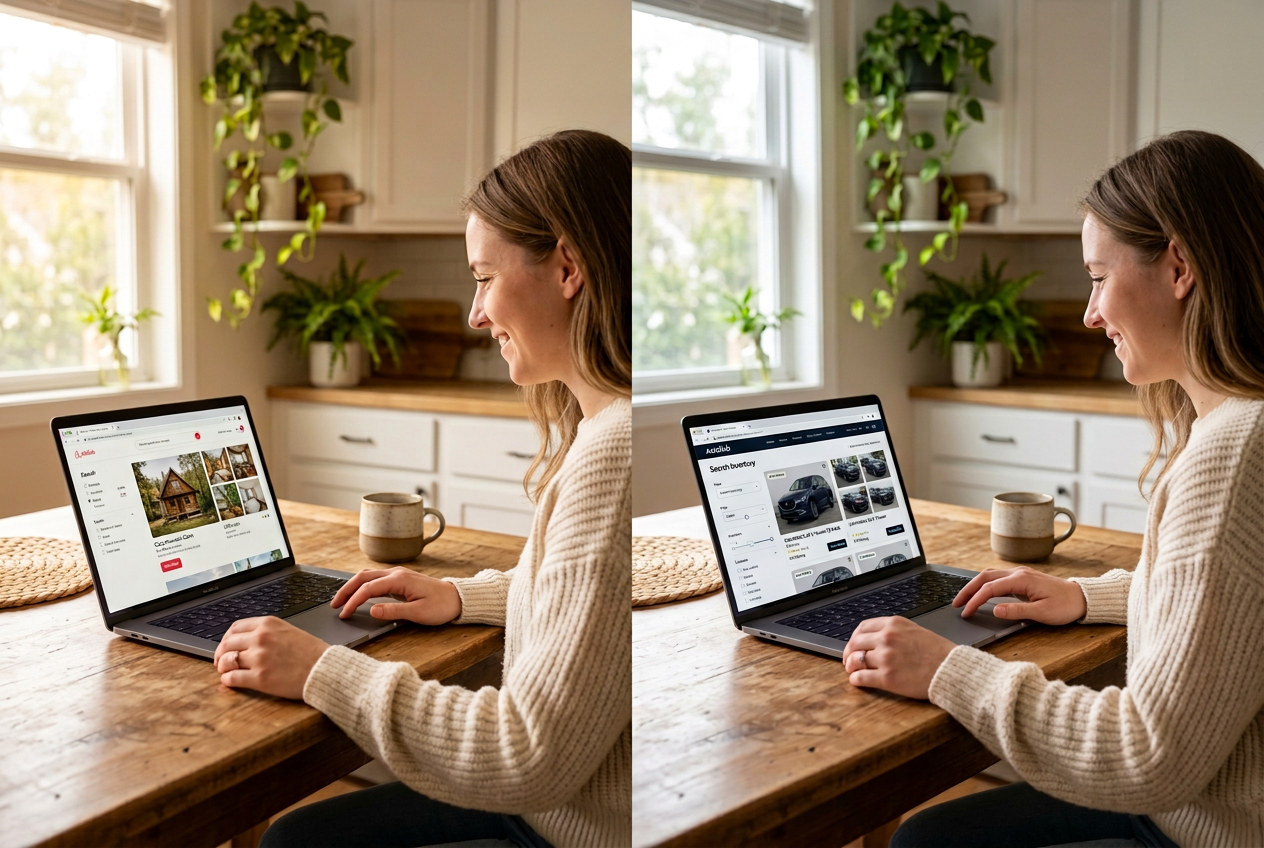
A travel site that says “here are the top 10 things to do in Sedona, based on our team’s personal visits” outranks a keyword-rich but non-authoritative article every time — because the signals of real experience are detectable, by both readers and algorithms.
Your dealership content strategy should operate the same way. Don’t write about what the F-250 can do. Write about what happened when your customer brought one back after the first winter. Don’t publish generic finance FAQs. Write the actual questions the guy from Mobridge asked before he signed. That specificity is your SEO advantage, and it’s one that no big-budget competitor can replicate at scale.
The buyers coming into your market right now are more digitally sophisticated than any generation before them. They’ve been influenced by travel brands that make them feel something. They’ve been won over by people on TikTok who feel like friends. They’ve been trained by Amazon and Airbnb to expect a digital experience that feels personal, transparent, and real.
Most dealerships are still marketing like it’s 2015.
The good news is that the gap between where automotive digital marketing is and where it should be is enormous — which means the opportunity for the marketers willing to look outside the industry is equally enormous. You don’t need a bigger budget. You need a wider frame of reference.
Start studying the industries your buyers already trust. Steal their best moves. Apply them to your market, your inventory, your people.
The dealers who do this in 2026 won’t just be ahead of their local competitors. They’ll be building the kind of digital presence that the best agencies charge thousands of dollars a month to attempt — and falling short of, because they’re not the ones living it every day.
You are.
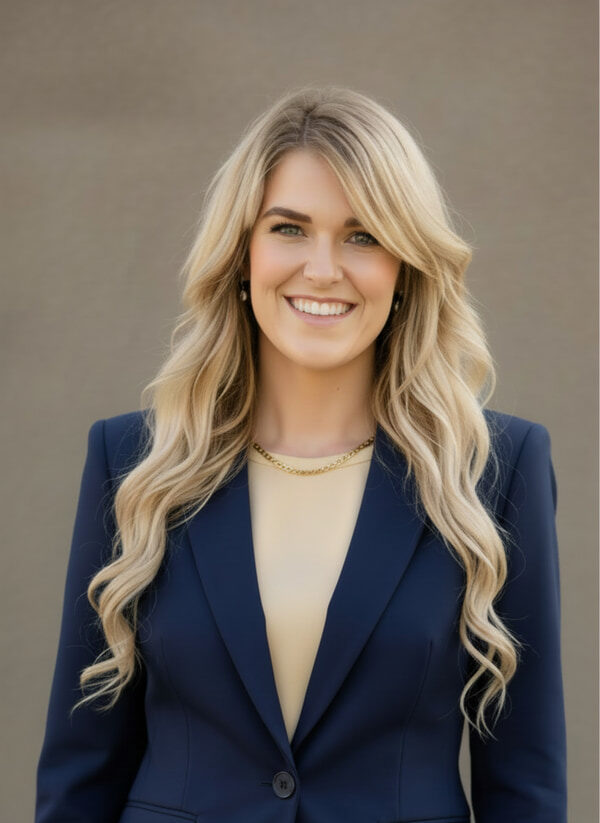
Lexy Tabbert is the Marketing Director for Beadle Auto Group, a family-owned dealership group serving northern South Dakota since 1975, with rooftops in Bowdle, Mobridge, and Faulkton. The group sells Chevrolet, GMC, Ford, Lincoln, Ram, Jeep, Dodge, and Chrysler vehicles — with a strong focus on pickups, heavy-duty work trucks, and family vehicles for an agricultural community.
Lexy manages the full marketing stack for the group independently — including paid search, Meta advertising, SEO, website content, CRM, and Google Business Profile — without an agency or assistants. Her approach is built on the belief that entrepreneurial-minded in-house marketers, equipped with the right tools and the willingness to look outside the automotive industry, can outperform vendor-dependent competitors at a fraction of the cost.
Her work sits at the intersection of real-world dealership marketing and the AI-forward, DIY mindset that regional dealer groups need to compete in 2026 and beyond.
Beadle Auto Group — BeadleAutoGroup.com
The views expressed in this article are the author’s own and based on firsthand experience managing multi-rooftop dealership marketing in a rural agricultural market.