Magazines cover a wide array subjects, including but not limited to fashion, lifestyle, health, politics, business, Entertainment, sports, science,



Magazines cover a wide array subjects, including but not limited to fashion, lifestyle, health, politics, business, Entertainment, sports, science,
Automotive Marketing · Practitioner Perspective
Ryan Green · Marketing Director, Weld County Garage GMC | Hummer · March 2026
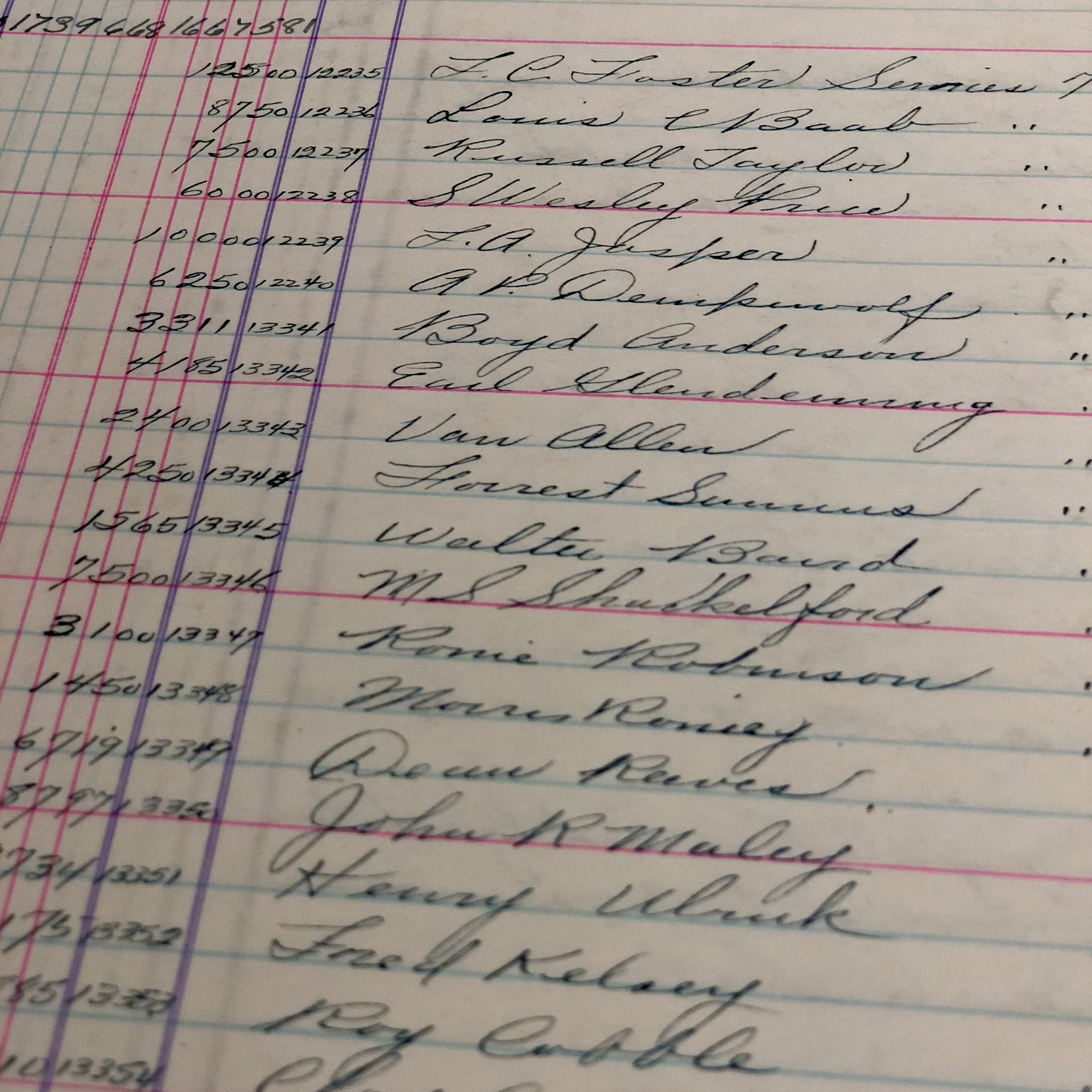
There’s a ledger sitting on a shelf in the very back of our dealership that I think about more than I probably should.
It’s from 1908. Handwritten entries — the first transactions ever recorded at Weld County Garage in Greeley, Colorado. The ink has faded but the script is still legible: real customers, real deals, committed to paper by hand in the year Henry Ford introduced the Model T and most Americans still got around on horseback.
I’ve worked here for 24 years. Which means I’ve been part of this place for longer than most of our competitors have been in business — and I’m still a relative newcomer compared to the institution I work for.
That context shapes everything about how I approach modern marketing. And I think it has something to teach the rest of the industry, especially the marketers who are chasing the newest platform, the freshest tactic, the next thing that’s going to fix their funnel.
“117 years in one market looks like this from the inside: it’s not a trophy. It’s a problem to solve every single day.
And learning to work inside that problem — between a legacy that buyers already trust and a digital landscape that demands constant reinvention — is the most valuable marketing education I’ve ever received.
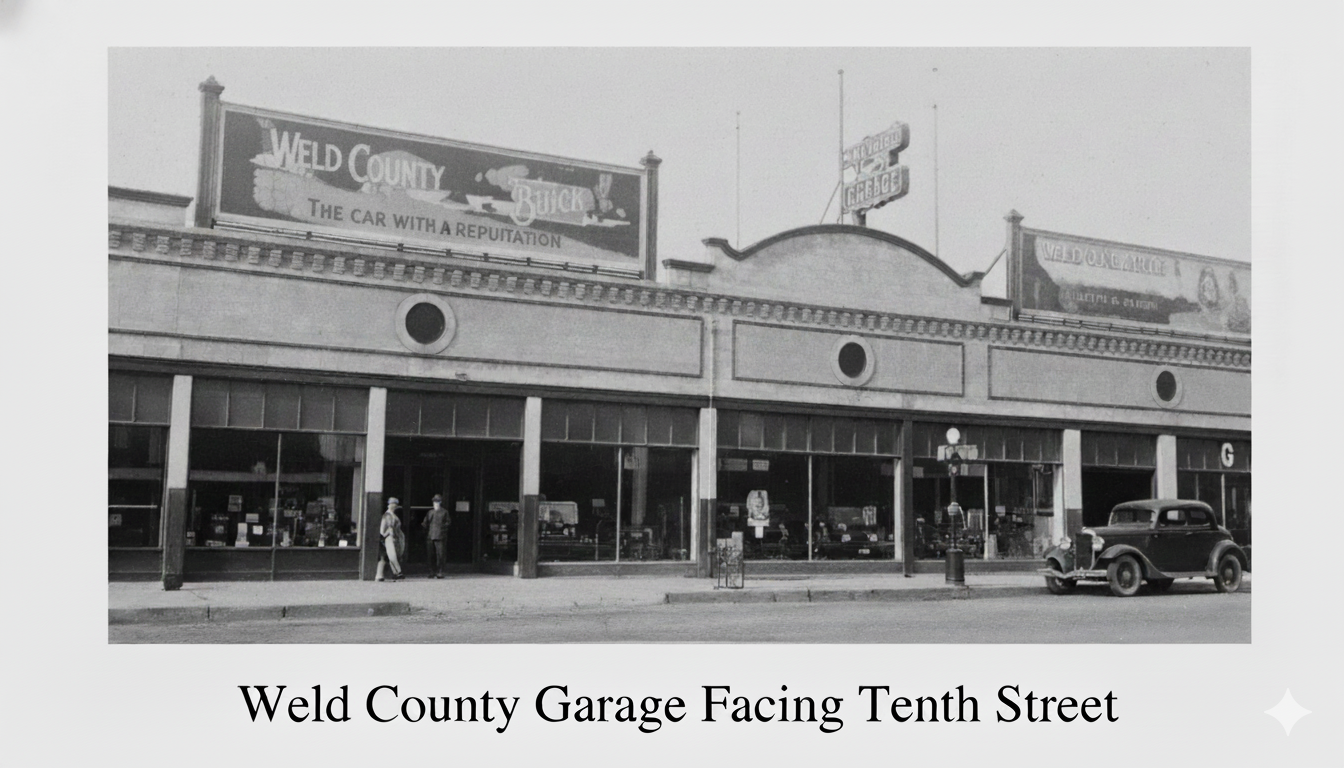
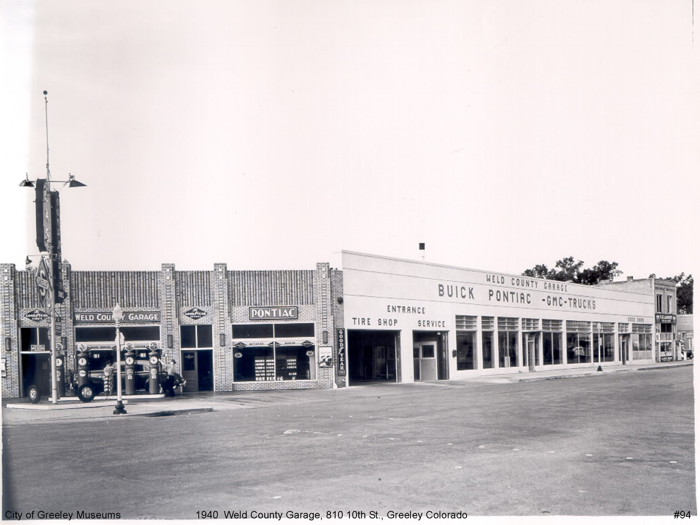
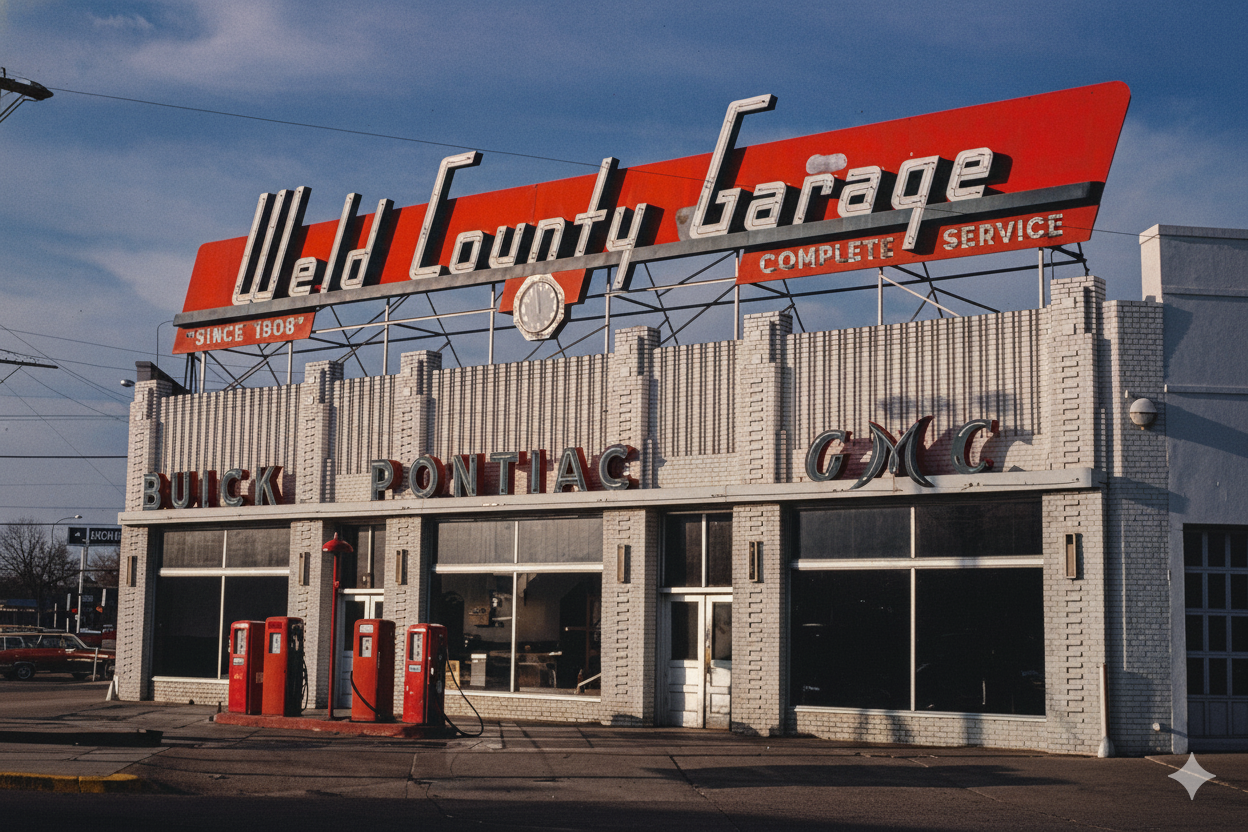
When a buyer in Weld County searches for a GMC truck, something happens that doesn’t happen for a dealer that opened five years ago: they recognize us. Not always consciously. But the name Weld County Garage has been part of this community’s landscape for over a century. It’s been on signs, in newspapers, in word-of-mouth conversations passed down across generations of families.
That recognition is an asset. A real one. And in the modern marketing framework — Google’s EEAT principles, specifically — it maps almost perfectly to what algorithms are increasingly trying to measure: Experience, Expertise, Authoritativeness, Trustworthiness.
We didn’t build those signals with a content strategy. We built them by being here, consistently, for 117 years.
But here’s the part that keeps me up at night: that asset is invisible if you don’t activate it.
Community trust doesn’t automatically translate into digital authority. A buyer who grew up hearing their parents talk about Weld County Garage will still open Google, search for trucks, and click whatever shows up first — which might be a dealer from Denver with a bigger ad budget and a slicker VDP. The legacy is a head start, not a guarantee.
My job, as a modern marketer sitting inside a 117-year-old institution, is to translate something that exists in the community’s memory into something that also exists in the algorithm’s understanding of us. Those are two completely different disciplines. And most legacy dealers are only doing one of them.
I’ve watched buying behavior shift dramatically across my 24 years here. I’ve lived through the internet’s arrival in dealerships, the rise of third-party listing sites, the smartphone era, the shift to digital retailing, and now the AI era. Each wave convinced someone in the industry that buyers had fundamentally changed and that everything we knew before was obsolete.
What I’ve actually observed is more nuanced than that.
The tools buyers use to research and transact have changed enormously. The core psychology underneath those tools has changed very little.
Buyers still want to feel like they’re making a smart decision. They still want to feel like the person selling them something has their best interest in mind. They still want to believe that if something goes wrong, there’s a real human being who will pick up the phone. And they still want — maybe more than ever — to feel like they’re buying from someone who belongs to the same community they do.
That last one is the one that 117 years gives you in a way that no ad campaign can manufacture.
I’ve had customers come in and say, almost word for word: “My grandfather bought his first truck here.” That’s not a marketing outcome. That’s a community relationship that predates me, predates the internet, predates everything we’ve built digitally. My job is to honor it — and to find ways to make it visible to buyers who are three generations removed from their family’s first interaction with us.
“Legacy dealerships aren’t just selling cars. We’re offering continuity — and most of us just never say it out loud.
Here’s the honest challenge I navigate every day, and I don’t think I’m alone in it.
The buyers who already know and trust Weld County Garage are, on average, older. They grew up with us. They have the relationship baked in. When it’s time to buy a truck, they come back. The retention almost takes care of itself.
The buyers I need to reach — the 28-year-old buying their first new vehicle, the young family moving to Greeley from somewhere else, the agricultural professional who hasn’t yet formed a dealership loyalty — those buyers don’t have the inherited relationship. To them, we’re just another GMC store. And they’re going to evaluate us the same way they evaluate everything else: through their phone, in about 45 seconds.
That’s the tension. The messaging that resonates with a long-tenured customer (“Proudly serving Greeley since 1908”) can actually land wrong with a first-time buyer who reads it as: “This place is old. Is it stuck in the past?”
I’ve had to learn to speak two languages simultaneously.
For the community that already knows us, the job is affirmation and gratitude. Show up at events. Remember names. Post the things that remind long-term customers why they trust us — the people behind the brand, the community moments, the proof that we’re still the same dealership their family relied on. Our outdoor digital sign is part of this. We use it for humor, for local references, for the kind of messaging that only makes sense if you know Greeley — because the people who see it every day do know Greeley, and they feel seen when we act like we do too.
For the buyer who doesn’t know us yet, the job is completely different. The 117-year story has to earn its relevance. It can’t just be a number on a sign — it has to connect to something they care about right now. That means translating legacy into modern proof: We’ve been here this long because we do right by our customers. Here’s what that actually looks like. Video content. Real reviews. Staff introductions that make people feel like they know us before they walk in. SEO content that answers the specific questions a buyer in this market is actually asking.
The dealerships that figure out how to do both of these things at once have a durable competitive advantage that a dealer that opened three years ago simply cannot replicate. But it requires being intentional about the fact that these are two different audiences who need two different things, even when they’re both looking at the same website.
To understand the scale of what I’m navigating, you need to understand what’s happened to this city.
When Weld County Garage opened in 1908, Greeley had roughly 8,000 residents — farming families, railroad workers, people whose lives were organized around the land and the seasons. Growth was slow for decades. By 1950 the city had reached about 20,000 people. By 1980, just over 53,000. Gradual enough that community identity stayed largely intact between generations.
The 2020 census recorded Greeley at 109,289 — more than thirteen times what it was when that ledger was first written. The pace hasn’t slowed. The city is currently around 116,000 and adding roughly 2,000 new residents per year. By 2060, officials expect the population to double again. Weld County is projected to surpass Larimer County in total population by 2030, with the combined region exceeding one million people by 2044.
For a dealership marketer, those numbers mean one thing: every year, thousands of people arrive in this market with no knowledge of us, no family connection to us, and no reason to choose us over whoever shows up first on their phone.
|
8,000 Greeley population when we opened, 1908 |
116K+ Current population and growing |
2,000 New residents arriving each year |
2× Expected population by 2060 |
And then there’s the name.
Weld County Garage.
I’ve worked here for 24 years, and I still think about this name more than anyone outside the building probably realizes. Because it is both our greatest asset and our most persistent challenge — and I’m not sure those two things are separable.
For a family that’s been in Weld County for three generations, that name carries weight that no advertising budget could replicate. It signals permanence. It signals that we belong here the way the county itself belongs here. When a longtime local sees it, there’s a recognition that goes deeper than brand recall — it’s almost geographic. Weld County isn’t just our name. It’s where they live. We’re named after their home.
But walk a half mile to a new housing development on the west side of town — one of those 12,000 rooftops going in over the next decade — and ask the family who just moved from Arizona or Texas or California what “Weld County Garage” means to them. You’re likely to get a blank stare, or something worse: a polite assumption that we’re some kind of county government facility, or a maintenance shop, or a business that’s been around so long it probably hasn’t kept up with the times.
The word garage does real work against us with new buyers. In 1908, calling yourself a garage was forward-thinking — it signaled that you were in the business of these new mechanical vehicles, not horses. Over a century later, that same word lands differently. It can make us sound like a repair shop. It can make us sound small. In a world where competing dealers have names like Precision Automotive Group or Northern Colorado Motors, the word garage requires explanation — and in digital marketing, the moment you need to explain your name, you’ve already lost a few seconds of attention you can’t get back.
We have carried this name for 117 years and we would not trade it. The history embedded in it is irreplaceable. But I’ve learned — sometimes the hard way — that the name is not self-explanatory to someone who didn’t grow up here. And in a market that’s adding thousands of newcomers every year, the percentage of our potential customers who need that explanation is growing, not shrinking.
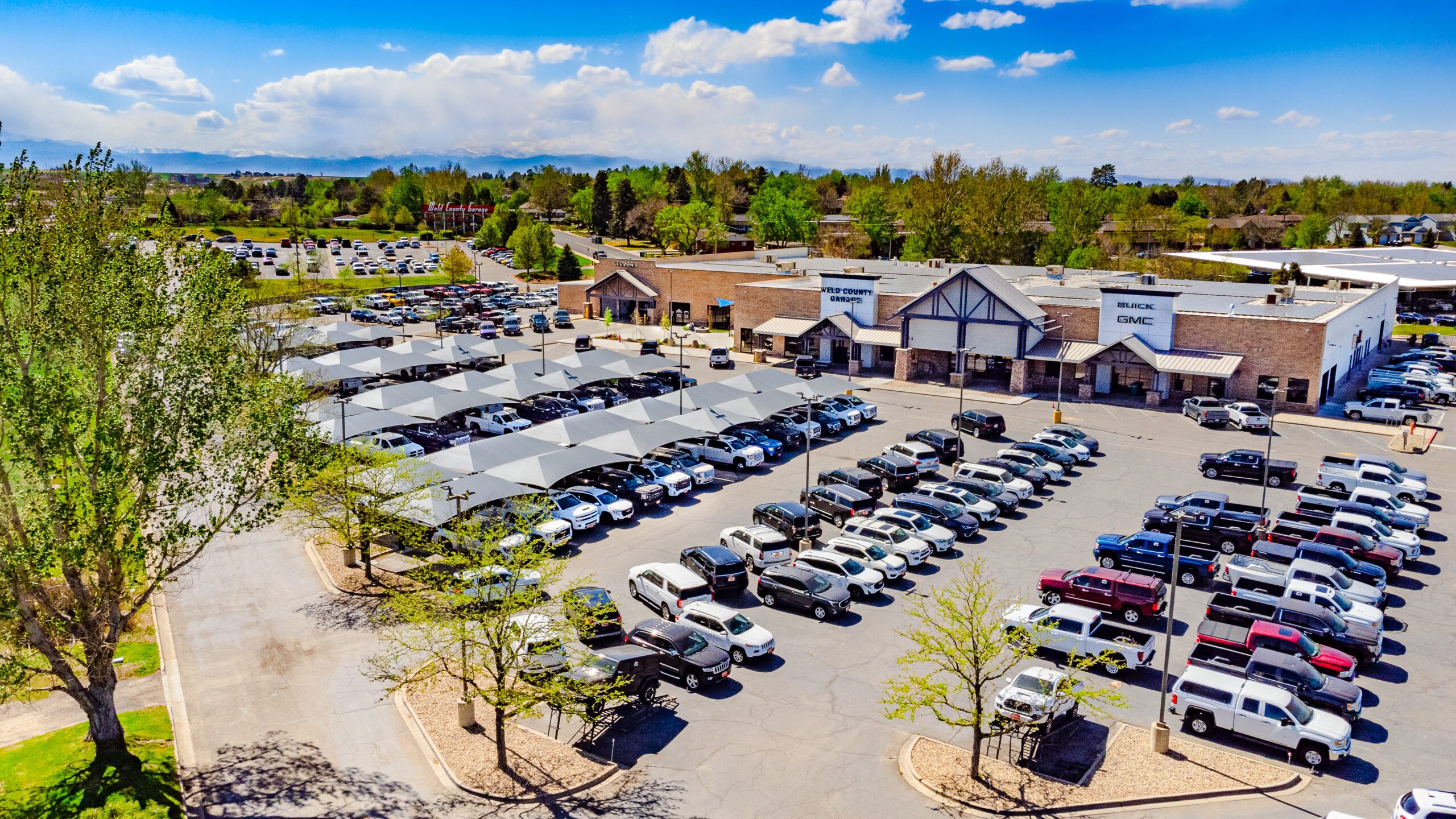
So we did something about it. We introduced a new logo — moving from the full “Weld County Garage” wordmark to WCG. The name isn’t changing. We’re still Weld County Garage, and we said so clearly when we introduced it. But the full name spelled out has always produced a mark that’s long, narrow, and difficult to use across the places a modern brand needs to live: social profiles, vehicle graphics, digital signage, embroidered apparel, a thumbnail on someone’s phone. WCG is bold, clean, and scalable. It works at any size without losing legibility. It’s a mark that a newcomer can learn — while still meaning everything it has always meant to the people who already know what those three letters stand for.
We made a short video to introduce it to our community — an honest explanation of who we are, where we came from, and why this was about accessibility, not identity.
Weld County Garage introduces WCG — still the same dealership, built for the next 117 years.
The response told us we’d gotten the balance right. Long-tenured customers weren’t confused — they were proud. And newer residents, for the first time, had a mark they could actually work with visually before they ever learned the full story behind it.
I’ll be concrete about what this looks like in practice, because I think it’s more useful than theory.
The tools I use every day span the full spectrum: AI platforms, vAuto for inventory, paid search, SEO content, social and video, community events, and our outdoor digital sign. On paper, that looks like a modern dealer marketing operation. And it is. But the strategy underneath all of it is shaped by something that predates every one of those tools.
The question I ask before almost every marketing decision is: Does this feel like Weld County Garage?
Not “Is this best practice?” Not “Is this what the OEM recommends?” Not “Is this what our competitors are doing?” Does it feel like us — like a business that has earned the trust of this community over four generations and takes that responsibility seriously?
“That filter has saved me from a lot of bad decisions. It’s also pushed me toward things that took longer to prove out but built something more durable than a short-term conversion rate.
When I use AI tools to build content, I’m asking them to help me say something we genuinely believe, faster — not to generate something generic that could have come from any dealer in any market. When I plan our social content, I’m thinking about whether a longtime customer would see it and feel proud of their connection to us, not just whether it will get clicks. When I write copy for a Google ad, I’m trying to find the line between performance-driven language and the kind of voice that actually sounds like a business that’s been part of this community for over a century.
That’s harder than just running a template. But it’s the work that compounds.
I want to end with something that I don’t hear said often enough.
Legacy dealerships — the ones that have been in their markets for 50, 75, 100+ years — have a responsibility to show what’s possible when you combine institutional trust with modern marketing discipline. We have an advantage most dealers would pay anything for: a community that already believes in us. The question is whether we’re good enough stewards of that asset to do something meaningful with it.
Too many legacy dealers I’ve encountered treat the history as a crutch. The “since 19-whatever” language on the sign, and that’s about it. The operations, the culture, the digital presence — none of it reflects the depth of what that longevity actually represents.
And too many modern marketers — especially those coming from outside automotive or outside their market — treat legacy as irrelevant. Old metrics for a new world. Just optimize the funnel and let the numbers speak.
Both of those are wrong.
The truth is somewhere in the intersection: a 117-year-old dealership that markets like it’s 2026, and a 2026 marketing strategy that’s grounded in 117 years of earned community trust. That’s not a contradiction. That’s the whole point.
I’ve spent 24 years trying to figure out how to live in that intersection. I don’t have it perfectly solved. But I know this: the dealerships that take both sides of it seriously — the legacy and the innovation — are going to be the ones still standing in another 117 years.
And I’d like to think Weld County Garage will be one of them.
About the Author

|
Ryan Green
Ryan Green is the Marketing Director at Weld County Garage GMC | Hummer in Greeley, Colorado — a dealership that has served the Weld County community since 1908. With 24 years at the dealership, Ryan manages the full marketing stack including paid search, SEO, social media, inventory marketing, AI-assisted content, and community events. His approach is rooted in the belief that a legacy dealership’s greatest competitive asset is community trust — and that trust only compounds when it’s backed by disciplined modern marketing. Weld County Garage GMC | Hummer — weldcountygarage.com/ryan-green The views expressed in this article are the author’s own and reflect his firsthand experience as a longtime in-house marketer at a multi-generational family dealership. |