



Women's Empowerment in Automotive: How Ann Wheeler and Mary Jo Wheeler-Schueller Rewrote the Rules
Every March 8, International Women's Day asks a direct question of every industry on the planet: how far have you actually come? For automotive, the honest answer is: not far enough. Women make up more than half the population, influence the majority of vehicle purchase decisions, and yet remain dramatically underrepresented in the boardrooms, dealer principals' offices, and management ranks of the industry that sells to them.
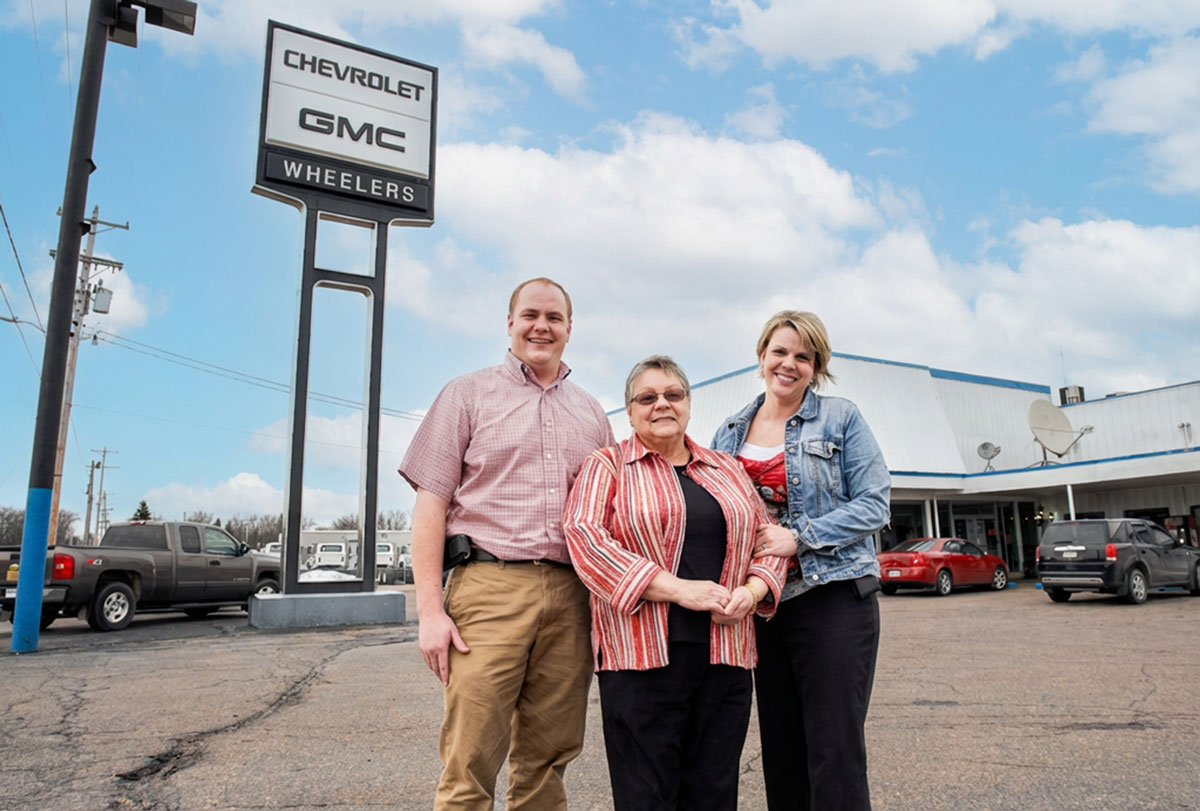
This year, rather than cite progress that mostly hasn't materialized, I want to tell the story of two women who didn't wait for the industry to change. Ann Wheeler and her daughter Mary Jo Wheeler-Schueller of Wheelers Family Auto Group in Marshfield, Wisconsin built something the industry still hasn't caught up to — a multi-rooftop, community-anchored, female-led dealership group that runs on honesty as a structural policy, not a marketing talking point.
I work here. I'm the Director of Marketing for Wheelers Family Auto Group, and what I witness daily is what women's empowerment in automotive looks like when it's built from the inside out over six decades — not announced at a press conference, but lived in every hiring decision, every policy, and every customer interaction. This is their story. And it matters far beyond Central Wisconsin.
The Gender Gap That Still Defines Automotive
Before we talk about the women who changed things, it's worth being honest about what they were — and are — changing against. Automotive is one of the most gender-imbalanced industries in the world, and the data from 2025 confirms that progress has effectively stalled.
According to research presented at the 2025 Autopromotec conference, women represent less than 25% of the global automotive workforce. In the aftermarket segment, that figure drops to 15%. Women in management positions account for less than 5%, and female business owners represent less than 3% of the sector. NADA data shows that women currently make up roughly 20% of the dealership workforce — and that number becomes far smaller the further up you climb.
Deloitte's 2025 global report on diversity and inclusion in automotive is particularly blunt: many in the industry acknowledge that progress on gender parity has stalled, and that women continue to face persistent barriers to advancement. A striking 68% of survey respondents across OEMs, dealerships, and suppliers said women are underrepresented in leadership — after years of DEI initiatives, conferences, and pledges.
The automotive industry has a documented habit of celebrating the existence of female leaders rather than creating the conditions for more of them. Ann Wheeler didn't wait for conditions. She created her own — one policy, one acquisition, one decision at a time, over four decades.
This is the backdrop against which the Wheeler women's story needs to be read. Ann Wheeler didn't ascend into a welcoming industry. She built her position in one that offered almost no roadmap for women at the dealer principal level — and then spent 40 years proving it could be done differently.
Ann Wheeler: From Filing Clerk to Dealer Principal
In June 1965, a young woman named Maryann Pernsteiner from Medford, Wisconsin walked into Wheeler Chevrolet in Marshfield and took a job as a filing clerk. The dealership had just opened the previous year, founded by Dan Wheeler through an unlikely handshake deal at a business partner's funeral. It was a modest, single-store Chevrolet franchise in a small Midwestern city.
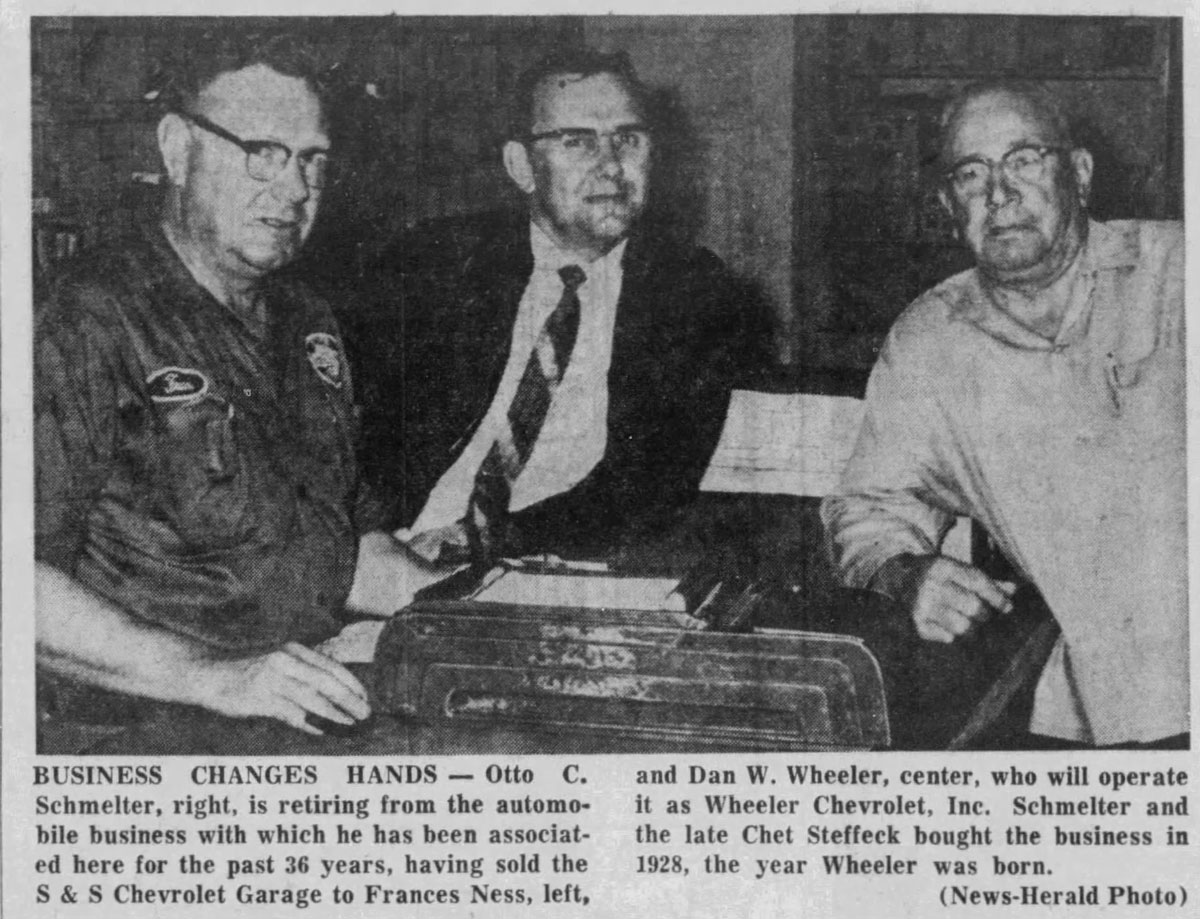
Nobody could have predicted what that filing clerk would become.
Ann and Dan Wheeler married in 1972. For the next three decades, she was the operational core of the business — handling the work that doesn't show up in the org chart but determines whether a dealership actually functions. In 1985, she was officially named Dealer Principal for Wheelers Chevrolet — one of only a handful of women to hold that title in the state of Wisconsin at the time. When Dan passed away in 2002, the business did not pause. Ann Wheeler was already running it.
Ann's Dealership-Building Timeline
| Year | What Happened | What It Represents |
|---|---|---|
| 1965 | Joins Wheeler Chevrolet as a filing clerk | The Beginning |
| 1972 | Marries Dan Wheeler; becomes co-operational leader | Partnership |
| 1985 | Officially named Dealer Principal | Historic Milestone |
| 1995 | Acquires Crown Oldsmobile, Pontiac & Cadillac | Expansion |
| 2002 | Dan passes away; Ann continues as sole leader | Resilience |
| 2005 | Purchases GMC franchise from Mid-State Truck Service | Dual-Brand Growth |
| 2015–2016 | Acquires Neuville Buick and Ironside GMC in Wisconsin Rapids | Market Expansion |
What's striking about Ann's story isn't just the trajectory — it's the method. She didn't grow by chasing volume or acquiring aggressively for the sake of scale. Every move was deliberate, community-anchored, and built on a clear philosophy: honest dealing above all else. The quote she's known for is as plain as it gets:
"We won't be the rich car dealership in the cemetery, we will be the honest one." — Ann Wheeler
That line was never a tagline. It was an operating instruction. And it produced the policy the Wheeler dealerships are perhaps most known for — a no-commission sales floor that has been in place for over 30 years. In an industry where the commission model structurally pits the salesperson's interests against the buyer's, Ann Wheeler removed that conflict from her business. It was a women's empowerment decision and a customer trust decision at the same time — proof that the two don't have to be in tension.
The Philosophy That Changed How Customers Are Treated
Ann Wheeler's no-commission model deserves its own examination because it is genuinely rare and genuinely impactful — and because it came directly from her values, not from a consultant's recommendation or a competitive pressure analysis.
Women are the majority influencers in vehicle purchase decisions. Research consistently shows that women are involved in more than 80% of car-buying decisions, yet NADA's own Women Driving Auto Retail initiative acknowledges the industry has long underserved and undervalued them as both customers and employees. The commission model is a large part of why: it incentivizes salespeople to maximize the transaction, which creates the high-pressure, adversarial dynamic that women — and most buyers — report finding alienating.
Ann Wheeler looked at that dynamic and eliminated it from her business. She did it in the 1980s, decades before DEI reports and customer experience consulting became industry staples. The result: Wheelers has maintained a no-commission sales floor for over 30 years, and it has become one of the group's most durable competitive differentiators. Customers who walk in skeptical can ask how salespeople are paid and get a straight answer. That conversation builds trust faster than any advertising campaign.
This is what female leadership in automotive can look like at its best: policy decisions that reshape the customer experience in ways that are better for everyone — buyers, employees, and the long-term health of the brand.
Mary Jo Wheeler-Schueller: Leading the Next Generation
Ann Wheeler's legacy didn't stop with her. It continued — as the best legacies do — through people she shaped. Her daughter, Mary Jo Wheeler-Schueller, now co-owns and operates Wheelers Family Auto Group alongside her brother Daniel. She grew up watching a woman lead a dealership with intelligence, patience, and an unwillingness to compromise on honesty. That's the environment that formed her.
"Daniel Wheeler, my brother, and myself pride ourselves on continuing what our mother and father started and have instilled in us from little on: hard work and honesty," Mary Jo has said. That's not a mission statement drafted in a boardroom. It's a description of how she was raised — and how she leads.
Under Mary Jo and Daniel's leadership, the group has expanded to six rooftops across Central Wisconsin: Marshfield, Medford, Abbotsford, Merrill, Wisconsin Rapids, and Coloma. Each expansion followed her mother's logic — enter underserved markets, retain community relationships, and carry trust equity earned over decades into a new area.
The Continuity That Makes This Story Extraordinary
What Mary Jo represents in the context of women's empowerment in automotive isn't just individual success — it's generational continuity. She grew up seeing female leadership normalized in a place where it was anything but normal. She inherited not just a business, but a proof of concept: that a woman could run a dealer group built on honesty, community trust, and employee dignity, and grow it into one of Central Wisconsin's most respected automotive operations.
- 2011: Mary Jo and Daniel convert a Tires Plus into Wheelers Auto Repair & Tire Center — expanding beyond the vehicle transaction into long-term service relationships
- 2011: Acquire M&H Chevrolet in Medford — Ann's hometown, a move with deep personal and community meaning
- 2017: Acquire Sebold Chevrolet in Abbotsford (est. 1926) — retaining all staff and honoring a century of community automotive history
- 2020: Open Wheelers Chevrolet of Merrill — restoring a Chevrolet presence in a market that had gone dark
Every one of those decisions reflects the same values Ann established. That's the point. Women's empowerment in automotive isn't just about representation in the moment — it's about the leadership culture you build that outlasts any individual career.
What Their Story Means for Women in Automotive Today
Deloitte's 2025 report on women in automotive stressed that role models matter — that the absence of visible female leaders at the top contributes directly to what they describe as the "vanishing women" phenomenon, where women who enter the industry exit it before reaching senior positions. They find no one who looks like them in the roles they're aiming for, and the pipeline quietly collapses.
The Wheeler women are exactly the kind of role models that report is calling for — not in a corporate headquarters or an OEM C-suite, but in a regional, community-anchored dealer group in Central Wisconsin, which is where most of the automotive industry actually lives. This is not a story that requires a national platform to be instructive. It requires attention.
For women currently in automotive — whether in a BDC, a service drive, a sales desk, or an accounting office — here's what the Wheeler story demonstrates:
- You don't need a male sponsor or a corporate diversity program to build something meaningful. Ann Wheeler did it in 1965 with a filing clerk job and work ethic.
- Policy decisions are leadership decisions. Changing how customers are treated, how employees are compensated, or how the business grows is as much a leadership act as any title change.
- Legacy is built in the culture you create, not the vehicles you sell. The standards Ann set are still operating in every store Mary Jo leads.
- Community is a competitive advantage. Both women grew the business by deepening community trust, not by outspending competitors on advertising.
- Generational leadership is possible — and visible examples of it matter more than any DEI initiative can replicate on its own.
For dealer principals and dealer group leaders — male or female — the Wheeler model is a masterclass in what women's leadership actually produces when it's given room to operate: a more trust-driven customer experience, a more values-aligned business culture, and a competitive position that no advertising budget alone can replicate.
5 Frequently Asked Questions About Women's Empowerment in Automotive
What percentage of the automotive workforce is women?
According to research presented at the 2025 Autopromotec conference, women represent less than 25% of the global automotive workforce. In aftermarket and management roles, the numbers drop sharply — below 5% in management and below 3% in business ownership. NADA data shows women currently make up roughly 20% of the dealership workforce in the U.S. Deloitte's 2025 global report confirms that progress on gender parity in automotive leadership has effectively stalled despite years of diversity initiatives.
How did Ann Wheeler become one of Wisconsin's first female auto dealers?
Ann Wheeler (born Maryann Pernsteiner in Medford, WI) joined Wheeler Chevrolet in June 1965 as a filing clerk. She and founder Dan Wheeler married in 1972 and ran the business together until his passing in 2002. Ann was formally named Dealer Principal in 1985 — one of only a handful of women to hold that title in Wisconsin at the time. She drove the group's expansion through five major acquisitions and maintained the no-commission sales policy she championed as a direct expression of her values.
What is International Women's Day and why does it matter for the auto industry?
International Women's Day, observed annually on March 8, is a global event recognizing women's social, economic, cultural, and political achievements while calling for accelerated gender parity. For an industry where women hold fewer than 3% of business ownership positions and Deloitte's 2025 report confirms that parity progress has stalled, IWD is both a moment to honor trailblazers and an urgent reminder that recognition alone is not enough — structural change at the ownership and leadership level is still the work.
How has Mary Jo Wheeler-Schueller continued her mother's legacy in automotive?
Mary Jo Wheeler-Schueller now co-owns and operates Wheelers Family Auto Group alongside her brother Daniel, growing the group from Ann's original single Marshfield store to six rooftops across Central Wisconsin. She has maintained every core value her mother established — the no-commission sales model, community-first expansion, and honest-dealing culture — while continuing to serve as a living example of generational female leadership in automotive retail. Under her leadership the group has added Medford, Abbotsford, Merrill, Wisconsin Rapids, and Coloma locations.
Why does women's leadership improve dealership culture and customer trust?
Research consistently links diverse leadership to stronger business outcomes, broader perspective, and more inclusive cultures. In automotive retail specifically — where women influence or make the majority of vehicle purchase decisions — female leadership at the ownership and management level creates direct alignment between the business and its core customer base. The Wheeler example shows this concretely: Ann's no-commission model, a values-driven policy decision, reduced the adversarial buying dynamic that most alienates customers and helped build a trust-based competitive position that has lasted over 30 years.
Point of View: The Industry Needs More Ann Wheelers — Not More Announcements About Them
Every March 8, the automotive industry produces a wave of social posts, press releases, and conference keynotes about women's empowerment. Some of it is sincere. Most of it costs nothing and changes nothing. What costs something is what Ann Wheeler did: building a dealership culture that structurally removed the adversarial dynamic from the sales floor, staying in her community through every downturn, and doing it for four decades without waiting for the industry to validate the approach.
The Deloitte numbers don't lie. Sixty-eight percent of automotive professionals say women are underrepresented in leadership. Less than 3% of automotive business owners are women. After years of initiatives, panels, and pledges — that's the scorecard. The industry is celebrating the idea of female leadership far more than it's actually producing it.
What changes that isn't a hashtag. It's mentorship that's structural rather than occasional, compensation models that don't reward aggression, and ownership-level commitment to hiring women into roles with real authority — not just customer-facing ones. Ann Wheeler did all three of those things, in the 1980s, in a dealership in Marshfield, Wisconsin. She didn't need a movement. She built one, quietly, by doing the work.
This International Women's Day, my ask is simple: find the Ann Wheeler in your market and tell their story. Not because it's good for your brand (it is), but because the automotive industry has a genuine representation crisis and the solution is already in front of us — in the form of women who've been doing it right for decades, largely without recognition. Give them the microphone. Let the story do the work.
About the Author
Branden Bodendorfer is the Director of Marketing for Wheelers Family Auto Group , a six-rooftop Chevrolet and GMC dealer group in Central Wisconsin. With 20+ years of business and marketing experience, he has been recognized with SBA Entrepreneur of the Year nominations and Small Business of the Year awards, and has been featured on ABC World News, the NBC Today Show, ESPN, CNN, and Disney platforms.
In addition to his automotive marketing work, Branden is the creator of the Key2Success Planner — a digital planning and productivity system used by professionals in 52 countries — and operates a business coaching practice focused on leadership, systems, and scalable growth.
His automotive content, including the Destination EV YouTube channel covering GMC Hummer EV and Sierra EV, has built a substantial following among consumers and industry professionals.
Branden brings a practitioner's perspective to automotive marketing: everything he writes about, he's actively running for real dealerships in competitive markets. His work sits at the intersection of data-driven strategy, digital retail best practices, and the on-the-ground realities of regional dealer groups.
brandenbodendorfer.com | Wheelers Family Auto Group | Key2Success Planner
Sources & References:
Autobody News — Driving Change: Why Inclusion Still Matters in Automotive, March 2026 | Shoosmiths / Deloitte — Driving Change: Women in Automotive, 2025 | NADA — Increasing Female Employment in Dealerships | NADA — Women Driving Auto Retail Initiative | Wheelers Family Auto Group — About Us, 2025 | Wheelers Careers — Company History